Large Language Objects (LLOs)
Exploring how generative AI can inhabit physical objects.
Exploring how generative AI can inhabit physical objects.
Duration
Jan 2024 - May 2025
Jan 2024 - May 2025
Role
GenAI Design Researcher
GenAI Design Researcher
Team
Marcelo Coelho (Advisor)
Marcelo Coelho (Advisor)

THE QUESTION
What happens when an LLM is not a chatbot? What would it look like to extend the capabilities of these models into the physical world?
THE ANSWER
Large Language Objects (LLOs) that perceive the world through new forms of input and produce meaning in ways beyond language.
FRAMEWORK

With this framework, users can provide contextual, visual, and embodied inputs and receive outputs designed specifically for the physical world.
PROJECT ONE
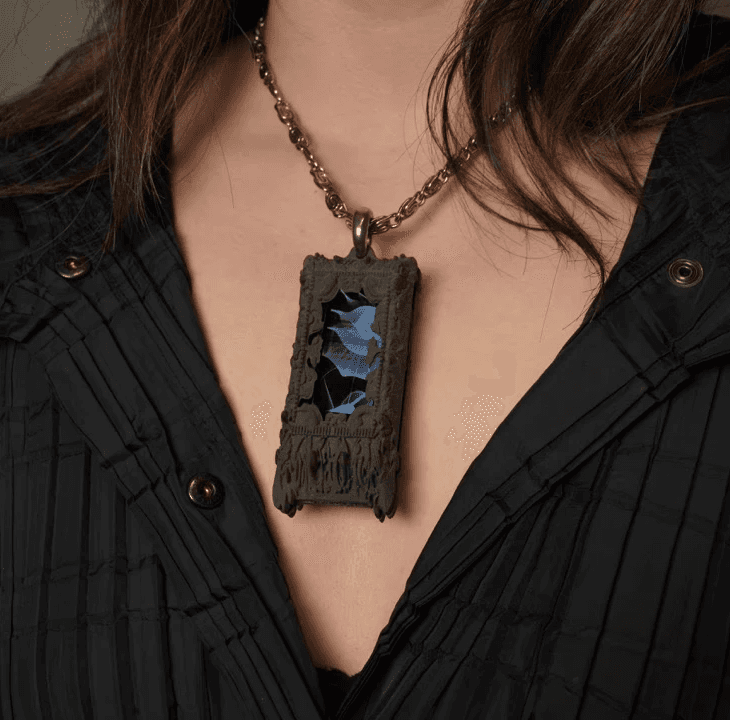
Ephemera: a generative AI necklace that creates a unique design based on what you wear and where you’re going.
Ephemera: a generative AI necklace that creates a unique design based on what you wear and where you’re going.

DESIGN OPPORTUNITY
We wanted to create an interaction whose value could not be meaningfully abstracted back into a phone or computer.
As a wearable object, the necklace becomes part of the user’s appearance rather than a separate device. Its AI-generated output is not displayed for productivity or information consumption; it becomes an aesthetic component of what the wearer chooses to present to the world.
HOW IT WORKS: PART ONE

See: the system analyzes the user’s outfit and appearance.
Listen: The wearer describes where they’re going or what the occasion is.
Interpret: GPT-4 synthesizes and combines both inputs into a creative description for the pendant.
PART TWO: GENERATING THE
PENDANT DESIGN
Rather than generating a completely random image, we designed the system to preserve a consistent visual identity across generations. To do this, we created a library of base patterns and designs that matched the physical aesthetic of the necklace. GPT-4 selects a base, while DALL·E combines the contextual description, human-designed pattern, and mask image of the outfit to generate a personalized variation for the pendant.
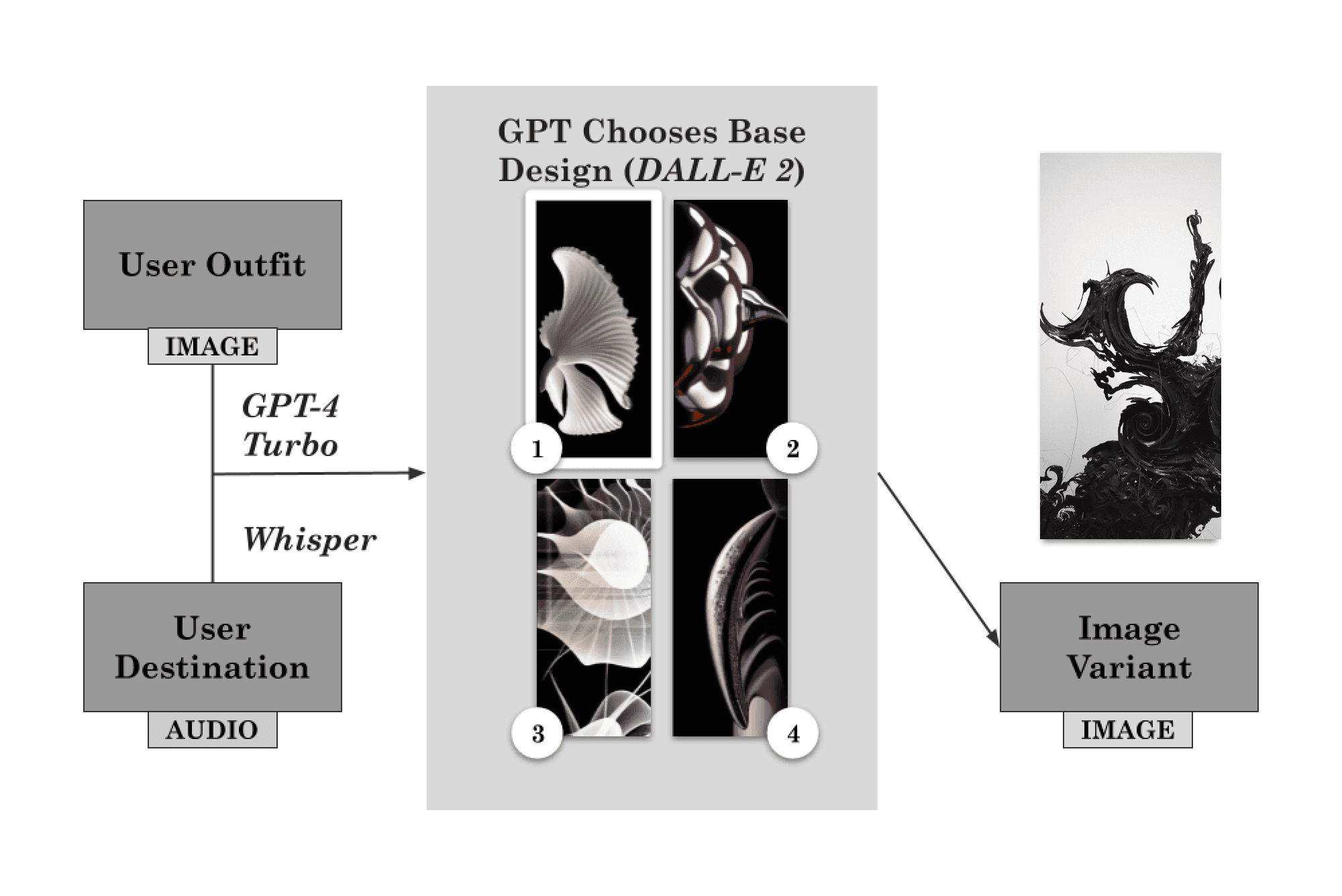
The final image is processed into the appropriate bitmap format and displayed on the LilyGo AMOLED screen.
Designing an object worth wearing
Designing an object worth wearing
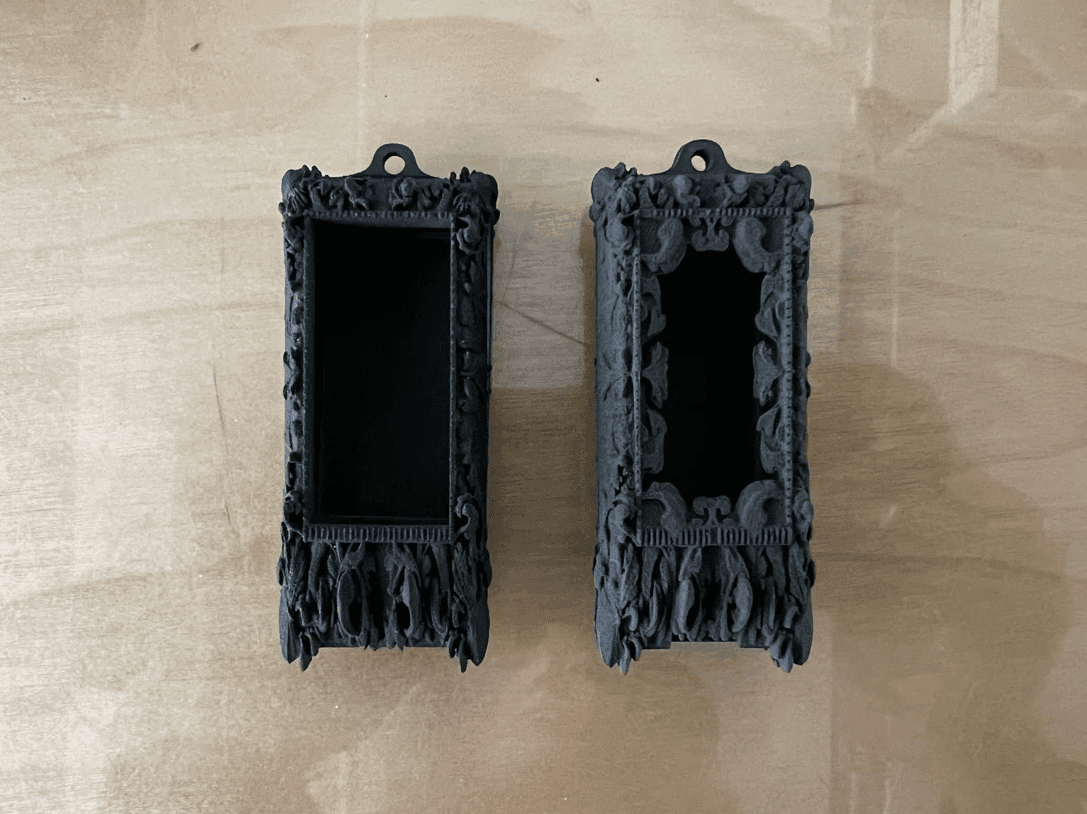
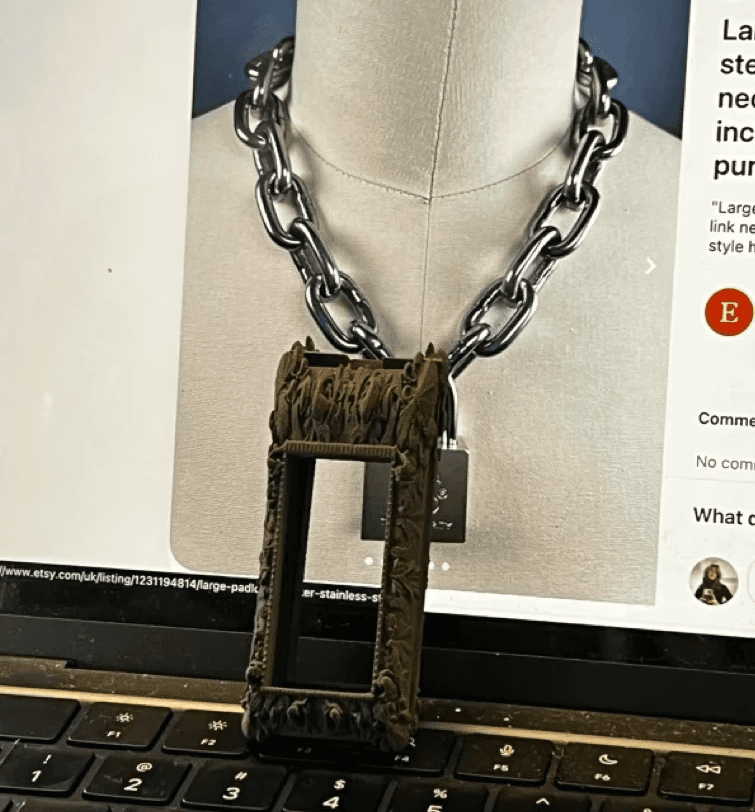
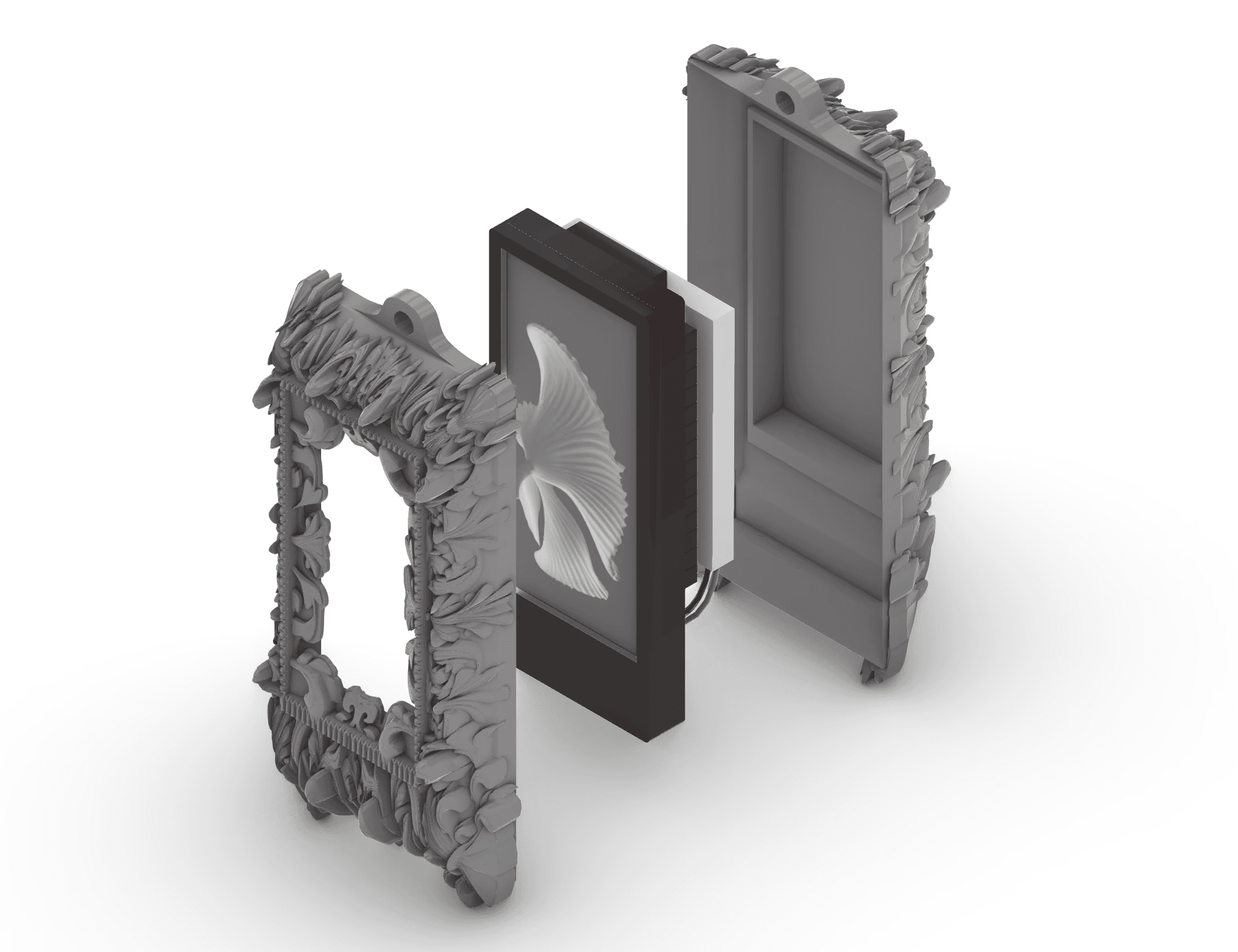
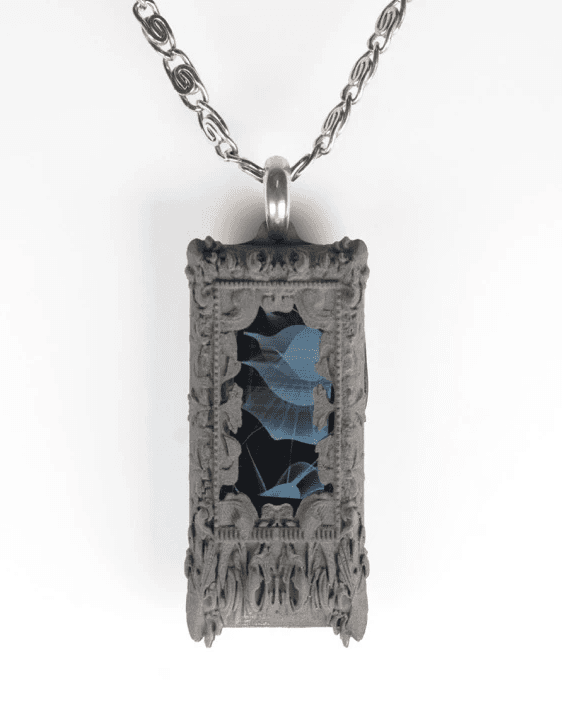
The sleek AMOLED screen risked making Ephemera feel like another gadget disguised as jewelry. I contrasted it with an ornate Baroque-inspired frame, whose irregular silhouette visually integrated the rectangular display into the piece itself.
The sleek AMOLED screen risked making Ephemera feel like another gadget disguised as jewelry. I contrasted it with an ornate Baroque-inspired frame, whose irregular silhouette visually integrated the rectangular display into the piece itself.
The sleek AMOLED screen risked making Ephemera feel like another gadget disguised as jewelry. I contrasted it with an ornate Baroque-inspired frame, whose irregular silhouette visually integrated the rectangular display into the piece itself.


CAD & FAB(rication)
CAD & FAB(rication)
The intricate filigree details required a fabrication process capable of reproducing fine ornamental geometry, so we opted for nylon powder printing over PLA.
The intricate filigree details required a fabrication process capable of reproducing fine ornamental geometry, so we opted for nylon powder printing over PLA.
The intricate filigree details required a fabrication process capable of reproducing fine ornamental geometry, so we opted for nylon powder printing over PLA.


LESSONS LEARNED
Physical form changes the interaction
The same system would have felt very different as a phone app. Making it wearable turned the AI’s output into part of the user’s self-expression and opened up new ways for the system to take in and respond to context.
AI needs creative direction
Early versions generated completely new images each time, but the results often felt disconnected from the necklace. Curated patterns and masks gave the model enough structure to create outputs that still felt cohesive with the object.
TO BE CONTINUED…
More LLOs coming soon!
If you want to see more, check out the MIT Design Intelligence Lab website.
If you want to see more, check the MIT Design Intelligence Lab website.
Large Language Objects (LLOs)
Exploring how generative AI can inhabit physical objects.
Exploring how generative AI can inhabit physical objects.
Duration
Jan 2024 - May 2025
Jan 2024 - May 2025
Role
GenAI Design Researcher
GenAI Design Researcher
Team
Marcelo Coelho (Advisor)
Marcelo Coelho (Advisor)
THE QUESTION
What happens when an LLM is not a chatbot? What would it look like to extend the capabilities of these models into the physical world?
THE ANSWER
Large Language Objects (LLOs) that perceive the world through new forms of input and produce meaning in ways beyond language.
FRAMEWORK
With this framework, users can provide contextual, visual, and embodied inputs and receive outputs designed specifically for the physical world.
PROJECT ONE
Ephemera: a generative AI necklace that creates a unique design based on what you wear and where you’re going.
Ephemera: a generative AI necklace that creates a unique design based on what you wear and where you’re going.
DESIGN OPPORTUNITY
We wanted to create an interaction whose value could not be meaningfully abstracted back into a phone or computer.
As a wearable object, the necklace becomes part of the user’s appearance rather than a separate device. Its AI-generated output is not displayed for productivity or information consumption; it becomes an aesthetic component of what the wearer chooses to present to the world.
HOW IT WORKS: PART ONE
See: the system analyzes the user’s outfit and appearance.
Listen: The wearer describes where they’re going or what the occasion is.
Interpret: GPT-4 synthesizes and combines both inputs into a creative description for the pendant.
PART TWO: GENERATING THE
PENDANT DESIGN
Rather than generating a completely random image, we designed the system to preserve a consistent visual identity across generations. To do this, we created a library of base patterns and designs that matched the physical aesthetic of the necklace. GPT-4 selects a base, while DALL·E combines the contextual description, human-designed pattern, and mask image of the outfit to generate a personalized variation for the pendant.